








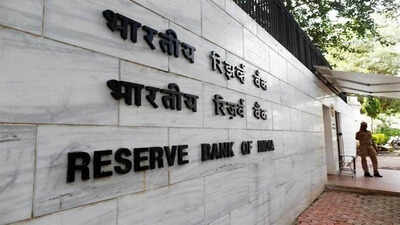
India’s foreign exchange reserves are often discussed when the rupee comes under pressure, global oil prices rise, or financial markets turn volatile. But the headline figure alone does not tell the full story. Forex reserves are a pool of external assets held by the country’s monetary authority that provide a buffer against external shocks and help maintain confidence in India’s ability to meet international payment obligations.As of July 31, 2026, India’s foreign exchange reserves stood at about $692.87 billion. The level has moved considerably during 2026 amid global market volatility, changes in gold prices, and foreign-exchange intervention by the Reserve Bank of India (RBI).For UPSC aspirants, forex reserves are important because the subject connects the Indian Economy, external sector, exchange-rate management, balance of payments, and monetary policy.
What are foreign exchange reserves?
Foreign exchange reserves are external assets held or controlled by a country’s monetary authority and readily available to meet balance-of-payments financing needs, intervene in foreign exchange markets, and maintain confidence in the currency.In India’s case, the RBI manages the country’s foreign exchange reserves. The reserves are not simply a stockpile of US dollars kept in a vault. They comprise several types of international assets.India’s reserves broadly consist of:
Foreign Currency Assets (FCA)- Gold
Special Drawing Rights (SDRs)Reserve Tranche Position (RTP) in the IMF
The composition is important because each component has a different form and function.
What makes up India’s forex reserves?
1. Foreign Currency Assets
Foreign Currency Assets are the largest component of India’s reserves. They primarily comprise assets denominated in major foreign currencies and can include investments in foreign government securities, deposits with foreign central and commercial banks, and other eligible instruments.The RBI’s reserves-management framework emphasises safety, liquidity and return, in that order.This means the RBI cannot simply chase the highest possible return. Since reserves may be required during a crisis, their security and availability are more important.
2. Gold
Gold is another component of India’s reserves. The RBI holds gold as part of its reserve assets. Gold provides diversification and is not dependent on the creditworthiness of a particular foreign government or currency issuer.However, the dollar value of India’s gold reserves can change even when the physical quantity of gold remains unchanged because international gold prices and exchange rates fluctuate.This is one reason why movements in India’s total reserves do not necessarily mean that the RBI has bought or sold an equivalent amount of foreign currency.
3. Special Drawing Rights
Special Drawing Rights (SDRs) are an international reserve asset created by the International Monetary Fund (IMF).An SDR is not a currency. Its value is based on a basket of five major currencies, the US dollar, euro, Chinese renminbi, Japanese yen, and British pound.SDRs can be exchanged for usable currencies among IMF members.
4. Reserve Tranche Position
India also has a Reserve Tranche Position with the IMF. It represents the portion of India’s quota in the IMF that can generally be accessed without the same conditions associated with borrowing under an IMF programme.Together, SDRs and the reserve tranche position form smaller but important parts of India’s overall reserve position.
Who owns India’s forex reserves?
This is an important distinction for UPSC.The reserves are assets on the RBI’s balance sheet. They are not a personal fund belonging to the government or a pool of money that the Finance Ministry can freely spend.The RBI manages the reserves under its statutory framework and investment guidelines.The Reserve Bank of India Act, 1934, provides the principal legal framework for the management of India’s reserves. The RBI also operates within the broader foreign-exchange framework established by the Foreign Exchange Management Act (FEMA), 1999.Therefore, it is more accurate to say that India’s foreign exchange reserves are held and managed by the RBI, rather than saying that the government “owns a $676-billion dollar account”.
How does RBI use forex reserves?
The RBI’s management of reserves has several objectives.1. Managing excessive volatility in the rupeeIndia follows a market-determined exchange-rate system. The rupee’s value is determined by demand and supply in the foreign-exchange market.The RBI does not announce a fixed exchange rate for the rupee. However, when the market becomes excessively volatile, the RBI can intervene.For example, if there is strong demand for dollars and heavy selling pressure on the rupee, the RBI can sell dollars from its reserves and absorb rupees from the market.This increases the supply of dollars and can help moderate excessive volatility.Importantly, RBI intervention is not the same as fixing the rupee at a particular exchange rate.The government has stated that the rupee is market-determined and that the RBI intervenes when necessary to contain excessive volatility.2. Meeting external payment requirementsIndia imports crude oil, electronics, machinery, defense equipment, and numerous other goods and services.Many international transactions are conducted in foreign currencies, particularly the US dollar.Adequate reserves provide confidence that India has the capacity to meet external payment obligations during periods when foreign-exchange inflows weaken.3. Providing a buffer during global crisesGlobal financial crises can cause capital to leave emerging markets rapidly.During such periods, countries with stronger reserves have a greater cushion against sudden external financing pressures.Forex reserves can therefore function as an external-sector safety net.They do not eliminate economic risks, but they can provide policymakers with greater room to respond to external shocks.4. Supporting confidence in the economyLarge and adequately managed reserves can reassure international investors, lenders and businesses that a country has the foreign exchange necessary to meet its external obligations.This is particularly important for an economy such as India’s, which has substantial merchandise imports and significant exposure to global commodity prices.
How does RBI build forex reserves?
India’s reserves can increase when foreign exchange flows into the country.These flows can come through:
- Merchandise and services exports
- Foreign direct investment
- Foreign portfolio investment
- Remittances
- External borrowings
- Other capital and financial flows
However, reserves do not automatically rise by the same amount as every dollar entering India. The RBI’s own intervention, valuation changes in foreign assets, movements in gold prices and exchange-rate changes can all affect the reported reserve level.Similarly, reserves can decline because of RBI intervention, valuation changes or changes in external assets.This distinction is important when interpreting weekly changes in India’s reserves.
Why does RBI intervene in the forex market?
The RBI’s objective is generally not to defend a particular rupee-dollar level.Instead, intervention is intended to prevent disorderly market conditions and excessive volatility.For instance, a sharp rise in crude oil prices can increase India’s dollar demand because oil imports become more expensive. If this creates severe pressure on the rupee, the RBI can use its foreign-exchange reserves and other instruments to smooth market conditions.Recent market developments have again highlighted this function. In August 2026, traders reported RBI intervention as geopolitical tensions and higher oil prices put pressure on the rupee.
Are high forex reserves always good?
A large reserve stock is generally considered a strength, but reserves also have a cost.The RBI has to balance three objectives:Safety → Liquidity → ReturnReserves must first be secure and readily available. Only after those considerations can the RBI seek reasonable returns on reserve assets.There is also an opportunity cost. Foreign assets held as reserves could otherwise potentially be deployed elsewhere in the economy. But reserves serve a different purpose: they provide insurance against external shocks.Therefore, the question is not simply whether reserves are “high” or “low.” Their adequacy must be assessed against factors such as imports, short-term external liabilities, capital-flow volatility, and the broader balance of payments.
India angle
India’s forex reserves are closely connected with the country’s growing integration into the global economy.A strong reserve position can help India manage the following:
- Global financial shocks
- Sudden capital outflows
- Oil-price spikes
- Exchange-rate volatility
- External financing pressures
- Disruptions in international trade
At the same time, reserves cannot permanently prevent currency depreciation if underlying economic pressures remain strong. Persistent trade deficits, high commodity prices, weak capital inflows or a stronger US dollar can continue to affect the rupee.For policymakers, therefore, forex reserves are a buffer, not a substitute for sound macroeconomic fundamentals.
Important institutions and laws
| Institution/Law | Role |
| Reserve Bank of India | Holds and manages India’s foreign exchange reserves |
| Reserve Bank of India Act, 1934 | Provides the statutory framework for reserve management |
| Foreign Exchange Management Act, 1999 | Governs India’s foreign-exchange management framework |
| International Monetary Fund | Issues SDRs and maintains India’s reserve tranche position |
| Bank for International Settlements | One of the institutions with which eligible reserve assets may be placed |
The RBI’s Department of External Investments and Operations is responsible for the management and investment of the RBI’s foreign currency and gold assets.
India’s forex reserves: Prelims Fact Box
| Component/Concept | What to remember |
| Foreign Currency Assets | Largest component of India’s forex reserves |
| Gold | Held as a reserve asset and provides diversification |
| SDRs | International reserve asset created by the IMF; not a currency |
| Reserve Tranche Position | India’s readily accessible position with the IMF |
| Reserve manager | Reserve Bank of India |
| Main legal framework | RBI Act, 1934 |
| Foreign exchange law | FEMA, 1999 |
| Reserve management principle | Safety, liquidity and return, in that order |
| Exchange-rate regime | Market-determined; RBI intervenes to manage excessive volatility |
| Latest figure used here | About $676.24 billion as of July 24, 2026 |
The latest reserve figure cited above is based on data for July 24, 2026.
UPSC Mains Practice Question
“Foreign exchange reserves act as an external-sector buffer but cannot substitute for sound macroeconomic fundamentals.” Discuss in the context of India’s exchange-rate management and external-sector stability.
Practice MCQs
1. Consider the following components:
- Foreign Currency Assets
- Gold
- Special Drawing Rights
- Reserve Tranche Position
Which of the above constitute India’s foreign exchange reserves?A. 1 and 2 onlyB. 1, 2 and 3 onlyC. 1, 2, 3 and 4D. 2 and 4 onlyAnswer: C2. With reference to Special Drawing Rights, consider the following statements:
- SDR is an international reserve asset created by the IMF.
- SDR is a currency issued by the IMF.
- Its value is based on a basket of major currencies.
Which of the statements given above is/are correct?A. 1 onlyB. 1 and 3 onlyC. 2 and 3 onlyD. 1, 2 and 3Answer: B3. The RBI’s management of foreign exchange reserves broadly prioritises:A. Return, liquidity and safetyB. Liquidity, return and safetyC. Safety, liquidity and returnD. Return, safety and liquidityAnswer: C4. Consider the following statements about India’s exchange-rate regime:
- The rupee has a fixed exchange rate against the US dollar.
- The RBI can intervene in the foreign-exchange market.
- RBI intervention can be used to contain excessive volatility.
Which of the above is correct?A. 1 onlyB. 2 onlyC. 2 and 3 onlyD. 1, 2 and 3Answer: C5. Which institution is responsible for managing India’s foreign exchange reserves?A. Ministry of FinanceB. Reserve Bank of IndiaC. Securities and Exchange Board of IndiaD. International Monetary FundAnswer: B
Five Key Terms to Remember
1. Foreign Currency Assets (FCA): Foreign-currency-denominated assets held as part of reserves.2. Special Drawing Rights (SDR): International reserve asset created by the IMF.3. Reserve Tranche Position: India’s readily accessible position with the IMF.4. Forex Intervention: Buying or selling foreign currency by the central bank to influence market conditions or contain excessive volatility.5. Balance of Payments: A systematic record of a country’s economic transactions with the rest of the world.
FAQs
1. Does the government directly own India’s forex reserves?The reserves are held and managed by the RBI and appear as assets on its balance sheet. They are not a discretionary cash balance that the government can simply spend.2. Does RBI use forex reserves to fix the rupee at a particular value?No. India’s exchange rate is market-determined. RBI intervention is aimed at managing excessive volatility and disorderly market conditions rather than maintaining a permanently fixed rupee-dollar rate.3. Are all India’s forex reserves held in US dollars?No. The reserves comprise foreign currency assets, gold, SDRs and the reserve tranche position with the IMF. Foreign currency assets themselves are diversified across eligible assets and currencies.4. Why does the value of India’s reserves change every week?Changes can result from RBI purchases or sales of foreign currency, movements in gold prices, exchange-rate changes and valuation changes in reserve assets, among other factors.5. Why are forex reserves important for India?They provide a cushion against external shocks, support confidence in the economy, help meet international payment requirements and give the RBI room to manage excessive volatility in the foreign-exchange market.