





Gabe Newell has put more than $816 million into deep-sea research; his Inkfish fleet is building a 162-metre science vessel |

Image Credit: Vard/Marine Insight Gabe Newell’s marine research organisation Inkfish has ordered a 162-metre deep-sea research vessel from Norwegian shipbuilder VARD. The ship, named RV11000, is valued at nearly €700 million, or about $816 million, and is scheduled for delivery in the first quarter of 2030. According to Marine Insight, the vessel will be designed…


Read More

Regional drought pushed Lake Hartwell low enough to expose trash usually hidden underwater; 148 volunteers across 14 sites in five counties removed about 8,300 pounds, including a record 36 tires

A prolonged drought has lowered Lake Hartwell enough to expose shoreline debris that normally sits underwater, giving volunteers an unusual opportunity to remove years of accumulated litter. According to WYFF 4, a recent cleanup brought together 148 volunteers who collected about 8,300 pounds of trash, including a record 36 tires. The Lake Hartwell Partners for…

Read More

Meet Shrikari Punjala, the 7th grader who turned eggshells into calcium carbonate crystals that reduced bacterial growth |

Representative Image of eggshells being processed to extract calcium carbonate for bacterial growth experiments in a laboratory (AI Generated Image) A seventh grader from Palatine, Illinois, has turned eggshells into calcium carbonate crystals and used them to investigate whether the mineral can affect bacterial growth. Shrikari Punjala, a student at Quest Academy, is one of…

Read More

A meteor crater in Oklahoma is nearly 100 million years younger than scientists thought; new zircon dating puts the ancient impact at about 370 million years ago

Researchers at the University of Texas at Austin have discovered that a meteor hit Ames, Oklahoma, at a different time than previously believed.Under the small town of Ames, a crater lies buried beneath layers of rock. The crater is also important today because the area is a major oil and gas-producing region. Researchers have now…

Read More

Cheetahs disappeared from Zambia’s Greater Luangwa for nearly 30 years; six are back as conservationists rebuild the ecosystem |

Image Credit: Wildlife Vagabond Six cheetahs have returned to Zambia’s Greater Luangwa Ecosystem after nearly three decades without confirmed sightings. The 3 males and 3 females were moved from South Africa to a remote part of North Luangwa National Park in July 2026, beginning a carefully planned effort to rebuild a wild population. The project…

Read More

This Costa Rican cattle ranch lost much of its wildlife; 10 years later, it is home to tapirs and 440 bird species |

A former cattle ranch in northern Costa Rica has become an unlikely refuge for wildlife. Near Tenorio Volcano National Park, Tapir Valley Nature Reserve has spent the past decade restoring land that was once used for grazing. Cattle were removed, trees planted and a lagoon restored, allowing a mixture of forest, wetlands and regenerating pasture…

Read More

Scientists found a chemical that helps naked mole-rat queens stop other females from reproducing; removing it triggered a colony power struggle |

A pregnant naked mole-rat queen, on the left, and a worker, on the right, sniff each other. Image Credit: Felix Petermann / Max Delbrück Center/Smithsonian Magazine Naked mole-rat queens appear to maintain their social order with the help of a chemical signal that keeps other females from reproducing. A study published in Nature has identified…

Read More

Meet Andrew Sun-Zhuang, the Washington baseball player who built a $260 AI pitching machine with 94% strike accuracy and reached a national STEM final |

PC: Society for Science/ Image AI generated Andrew Sun-Zhuang, a 7th grader at The Evergreen School in Shoreline, Washington, plays baseball and is constantly trying to improve his batting performance. His hit rate is 95 per cent against a batting machine but only 35 per cent in real life. According to the Society for Science,…

Read More

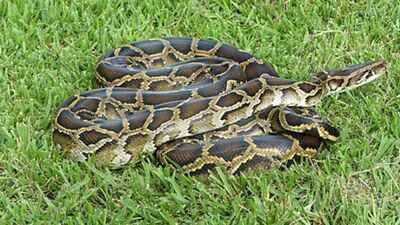
Burmese pythons and invasive plants are reshaping the Everglades; some native mammals have declined by about 90% while melaleuca has covered more than 40,000 acres |

The Everglades faces a major challenge from non-native species that can change habitats, disrupt food webs, and make restoration harder. Several invasive plants already cover large areas, while animals such as the Burmese python have altered populations of native wildlife.Melaleuca, Brazilian pepper, Australian pine, and Old World climbing fern are among the damaging plants. Together,…

Read More

Meet Wileidy Feliciano-Rivera: The Puerto Rican seventh-grader who turned plantain peels into biodegradable mulch that cut weed growth by up to 53% |

Representative Image of an agricultural field using plantain-based biodegradable mulch, illustrating reduced weed growth and improved soil conditions (AI Generated Image) A seventh-grade student in Puerto Rico has found a new use for plantain peels discarded by her school cafeteria, turning them into a bioplastic mulch that reduced weed growth by up to 53% in…

Read More