







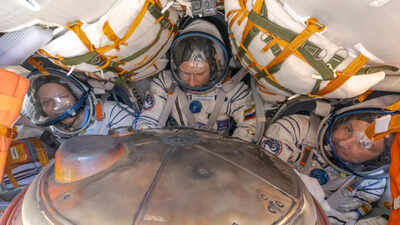
Us Russian Astronauts Return To Earth: US, Russian astronauts return safely to Earth after 8-month mission aboard ISS

Nasa astronaut Chris Williams, left, Roscosmos cosmonaut Sergey Kud-Sverchkov, center, and Roscosmos cosmonaut Sergei Mikaev are seen inside the Soyuz MS-28 spacecraft after they landed in Kazakhstan (AP) A joint US-Russian crew safely returned to Earth on Sunday after spending more than eight months aboard the International Space Station (ISS), marking another milestone in continued…

Read More

Quote of the day by Alexander Fleming: “You do not know what you will find, you may set out to find one thing and…” – why life’s biggest discoveries are often unexpected |

Alexander Fleming (Image: Wikipedia) Some of the world’s most important discoveries were never part of the original plan. History shows that breakthroughs often happen when curious minds remain open to the unexpected instead of focusing only on what they hoped to find. Alexander Fleming’s insightful observation, “You do not know what you will find, you…

Read More

In 1988, zebra mussels arrived in North America through a ship’s ballast water; within 10 years, they had spread across all five Great Lakes

zebra mussels (Representative image by Canva) In the late 1980s, an aquatic invader quietly entered North America through an unlikely route: a ship’s ballast water. That species was the zebra mussel, and within a decade it had spread across all five Great Lakes, triggering one of the most notorious invasive-species stories on the continent. More…

Read More

Aging may not be the real reason humans die: This hidden DNA damage could decide how long you live; study suggests |

For centuries, humans have searched for ways to extend life, first through medicine that prevented early deaths and later through research aimed at slowing the biological processes associated with aging. But even if scientists eventually found a way to stop many age-related problems, the body might still face limits built into its own cells. A…

Read More

Two scientists are planning to venture into one of the most dangerous environments in the solar system and touch it. NASA thinks the plan could work |

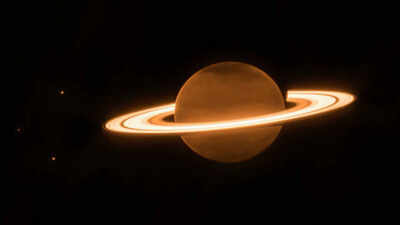
For centuries, space has fascinated humans like no other. From the sun’s glare to the moon’s surface and even Saturn’s shimmering rings, we have wanted to go up close and see it all. Now, two ambitious NASA-backed projects aim to truly touch Saturn’s rings, venturing into what is known as one of the most dangerous…

Read More

Scientists warn melting glaciers could form more than 50,000 new lakes in areas covered by ice: Could increase the risk of flooding in Asia, Andes, Alaska and the Arctic |

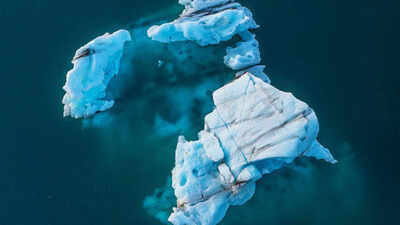
Across the globe, there are approximately 200,000 to 275,000 glaciers that hold 69% of the world’s fresh water. They are found in every continent except Australia and are in heavy concentrations in the Arctic, Alaska, and Antarctica along with high mountain ranges like the Himalayas and Andes. But what happens when climate change causes all…

Read More

Scientists recreated a tiny piece of the early universe inside a glass tube to study how life’s building blocks formed |

Long before Earth existed, before the Sun had fully formed, clouds of gas and microscopic dust drifted through interstellar space. Within those tiny grains, astronomers believe, some of the chemistry that eventually gave rise to planets, and perhaps even life, first began. Yet studying this process has always been difficult because the dust forms in…

Read More