






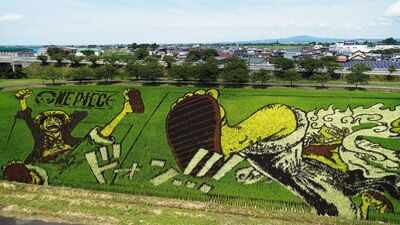
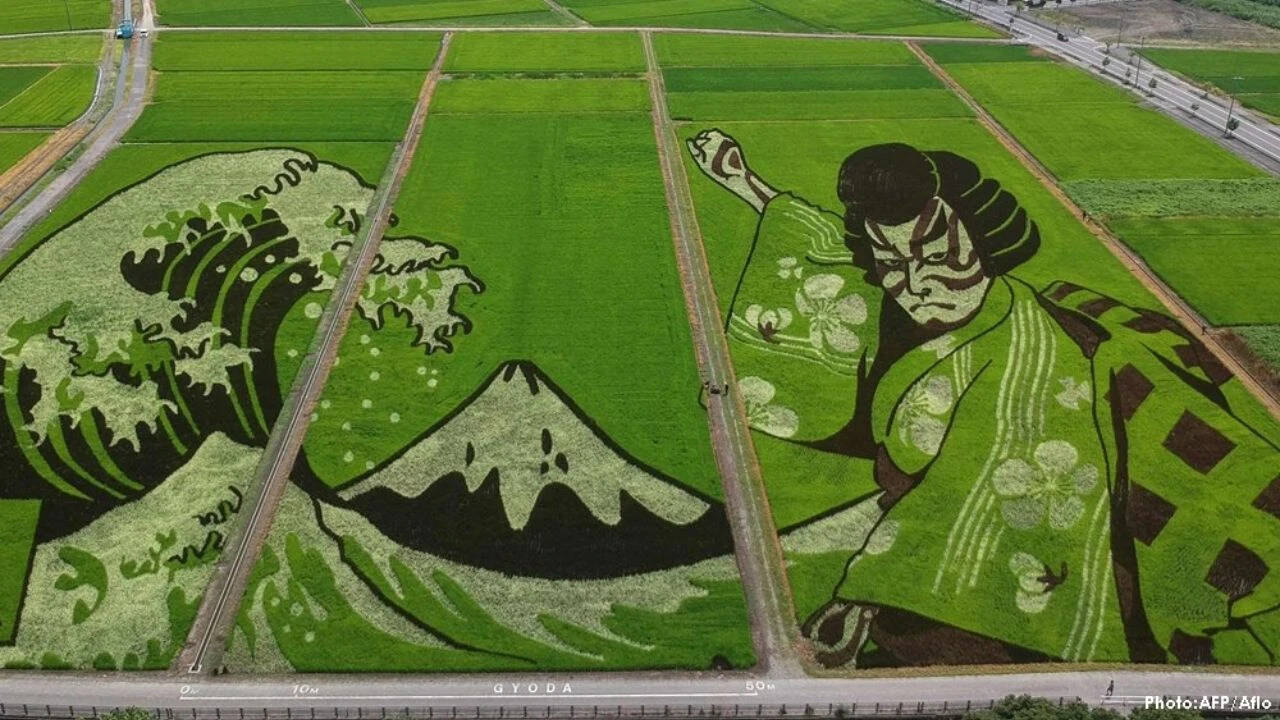
In Japan, rice isn’t just grown for consumption; it is also grown to create art. The fields in the country serve as a blank canvas for the creative farmers who use them to create characters including Demon Slayer’s Tanjiro and the French emperor, they have created it all.The colours are all different and the varieties even more so. From green, purple, white and red and many others. Rice is the staple food of the country and there are plenty of fields across the land. From Hokkaido to Kagoshima, about twenty producers and villages participate in Tambo Art, assimilated into the Land Art movement. The city of Gyoda (in the prefecture of Saitama) has embarked on this art by offering the largest artistic field in the world, 2.8 hectares, constituting a record registered in Guinness.
The artistic challenge of Tambo Art
The project began with germination in 1993, with the aim of the economic recovery of the region which was in decline following the ageing of the population in Japan.
Japan’s best-known Tambo Art project is that of Inakadate Village in Aomori. With 8,000 inhabitants, the village sees half of its land made up of rice fields. The project began with germination in 1993, with the aim of the economic recovery of the region which was in decline following the ageing of the population in Japan. To publicise the village, revitalise its economy and pass on the tradition of rice growing, the population decided to embark on Tambo Art, a vector of tourist attraction. They began creating works of art in the fields with just three varieties of rice and it worked.As the artwork became more ambitious, organisers realised that the designs looked distorted when viewed from the ground. Thus, by the mid-1990s, they began using computers and perspective drawing techniques to ensure the images appeared perfectly proportioned from observation platforms.Today, works consist of seven different colours with twelve varieties of rice used. The designs are extremely elaborate ranging from folk visuals to pop culture references, constructed for a dynamic result. In 2018, 26,000 visitors came to discover the works of Tambo Art in the village. Two specific observatories have been built in the village to fully appreciate them.Once planted, the fields require daily watering during Japan’s hot summer months and regular weeding to keep the colours vibrant throughout the season. Not just farmers, but schools and volunteers work together to create the murals.
When is the best time to visit Japan for Tambo Art?
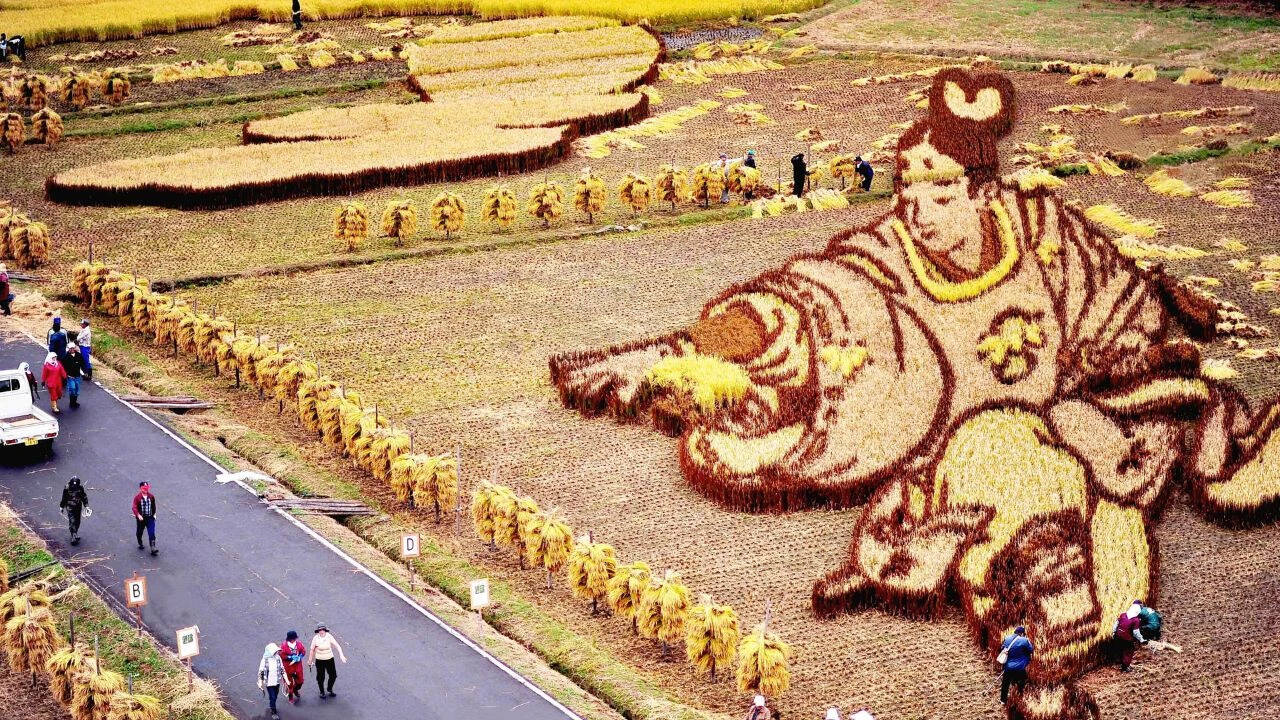
The appearance of the art changes as the rice plants mature, offering visitors a different experience throughout the season.
Planting of the rice takes place in May and harvesting in September. Thus, the best time to see Tambo Art works is between mid-July and mid-August. Although the fields are open to visitors in early June and remain accessible until the autumn harvest in early October, the peak summer weeks offer the most striking views.The appearance of the art changes as the rice plants mature, offering visitors a different experience throughout the season. Fresh green rice plants begin to grow in June with the outlines of the artwork gradually becoming visible. Rich shades of green, purple, yellow and white create more bold and sharply defined images that showcase the design more brightly. As the rice ripens before harvest, the fields transform into stunning shades of gold and bronze, giving the artwork a different yet equally captivating appearance.Every year, there are new themes such including Roman Holiday, manga characters such as Tezuka, Black Jack and Princess Sapphire or Astro Boy. In 2019, it was the image of legendary Japanese singer Hibari Misora, a performance in the film ‘Hard to be a man’ and ‘Oshin’, an NHK TV movie.
Where to see Tambo Art in Japan?
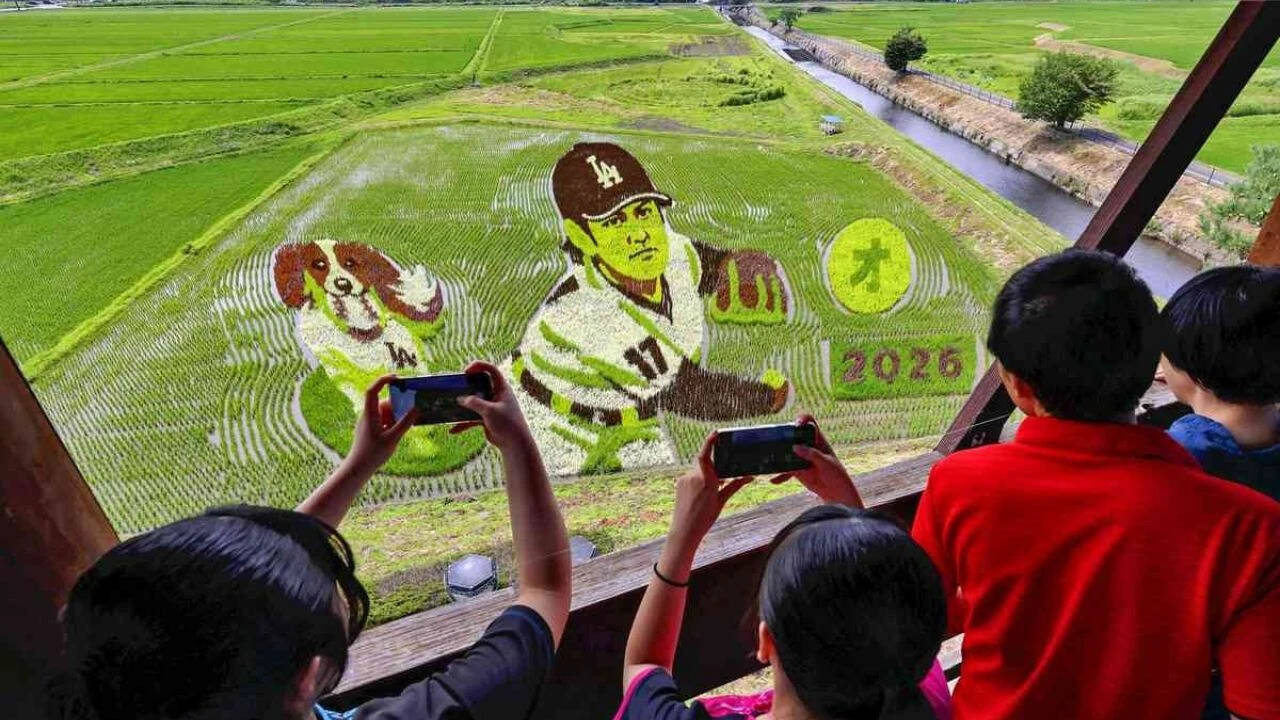
As the birthplace of Tambo Art, Inakadate village remains the most famous destination for viewing the perfectly curated art in the country.
As the birthplace of Tambo Art, Inakadate village remains the most famous destination for viewing the perfectly curated art in the country. The village features two exhibition fields linked by a complimentary shuttle bus, allowing visitors to explore both locations with ease.The observation deck at Inakadate Village Hall resembles a traditional Japanese castle and overlooks elaborate murals inspired by classic paintings, famous film characters and historical personalities. Meanwhile, the Yayoi no Sato site, located beside a roadside station, is known for showcasing anime, pop culture and large-scale contemporary themes. To reach the village, one needs to take the Railway Konan Line from Hirosaki Station and alight at the seasonal Tambo Art station, located beside Venue 2.Those staying in and around Tokyo can easily visit Gyoda city, home of the Guinness World Record for the world’s largest rice paddy art field. Visitors can take an elevator to the 50-metre observation tower at Ancient Lotus Park or Kodai Hasu no Sato, where enormous murals depicting Japanese mythology, anime, video games and other cultural themes unfold across the fields below. From Tokyo, take a train to Gyoda Station, a journey of about one hour, followed by a local city bus to Ancient Lotus Park.If your itinerary includes Hokkaido, then Tambo art fields in Asahikawa offer a charming experience. Here, local farmers create designs of regional mascots, wildlife and animals native to the region. The fields are located in the Higashi-Asahikawa farming district and are best reached by rental car or a short taxi ride from Asahikawa Station.