








Emperor penguins survive Antarctica’s brutal winters by huddling together, but a maths study reveals the hidden system behind their remarkable teamwork |

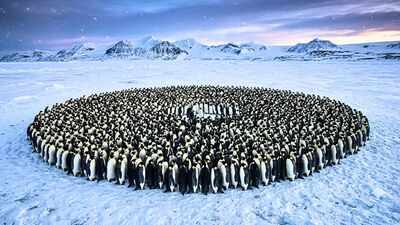
Every winter in Antarctica, emperor penguins gather in large groups called huddles to survive the cold. Temperatures can fall to -40 degrees Celsius, and strong winds make the weather even harsher. Without huddling together, these penguins would not be able to survive.But a penguin huddle is much more than a group of birds standing close…


Read More

40-gram, palm-sized AI micro-drone kills a flying insect autonomously in mid-air for the first time. Now it could eradicate mosquitoes and save thousands of lives |

A palm-sized AI drone weighing just 40 grams has achieved an engineering first by autonomously hunting and killing a flying insect in mid-air, paving the way for a new approach to mosquito control. Developed by US startup Tornyol, the tiny drone successfully detected, tracked and intercepted a flying moth during a controlled indoor demonstration without…

Read More

NASA’s curiosity rover spots mysterious honeycomb pattern on Mars, leaving scientists puzzled over its origin

Space and its mysterious world never fail to surprise humans. According to the latest report, 14 years after touching down on the Red Planet, NASA’s Curiosity rover has snapped a photo of a mysterious honeycomb-like texture on the Martian surface, lending yet another mystery to an ever-expanding list of Martian geological features.NASA’s veteran Curiosity rover…

Read More

Are data centres harming bees? Scientists are investigating the impact of electromagnetic fields |

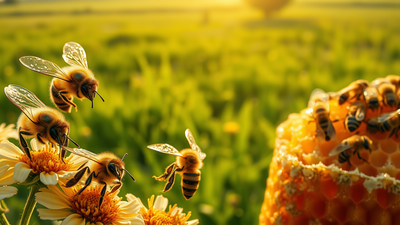
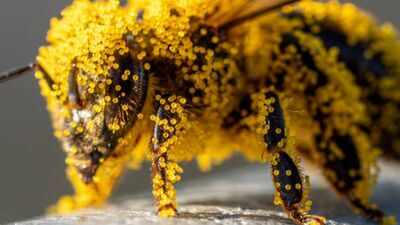
Bees are among the world’s most important pollinators, helping sustain ecosystems and supporting the production of many fruits, vegetables, nuts and seeds. Yet bee populations have been declining for years due to habitat loss, pesticides, diseases, parasites and climate change. More recently, another potential threat has entered the conversation: the rapid expansion of data centres….

Read More

Quote of the day by Charles Darwin: “An American monkey, after getting drunk on brandy, would never touch…” – a witty observation on why humans often repeat the mistakes they already know can harm them |

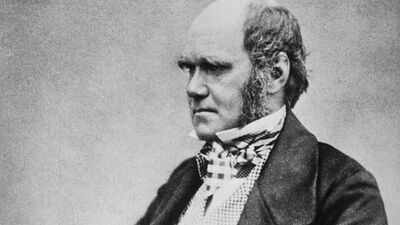
Charles Darwin (Image source: Wikipedia) A bad experience is supposed to teach a lesson, yet people return to habits they already know are harmful more often than logic would suggest. Charles Darwin noticed the same contradiction and put it more bluntly than most. “An American monkey, after getting drunk on brandy, would never touch it…

Read More

A scientist slipped into a pool beneath a US military base and found a fish later named ‘demon cavefish’ after the Demogorgon from Stranger Things

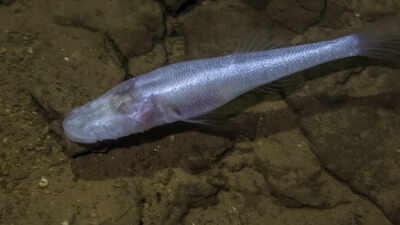
The Demogorgonichthys arcanus was discovered in a well-known area monitored by biologists for decades (Photo: Matthew Niemiller) A clumsy fall into an underground pool beneath an active US military base has led to the discovery of a strange, eyeless fish named after a TV series monster.Matthew Niemiller, an associate professor of biological sciences at the…

Read More

Scientists cut climbing vines from a damaged Borneo forest. Its canopy then grew three times faster, and the method may cost 10 times less than tree planting

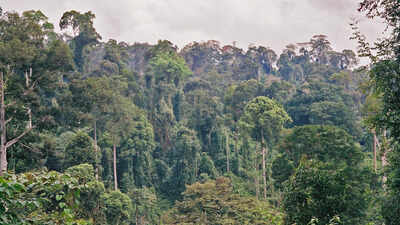
Dipterocarp forest at the Danum Valley Field Centre. Borneo’s tropical forests, dominated by trees from the Dipterocarp family, have some of the highest canopies in the world, with some trees reaching 100 meters Simply cutting back aggressive climbing vines in logged tropical forests allows the tree canopy to recover three times faster than planting new…

Read More