








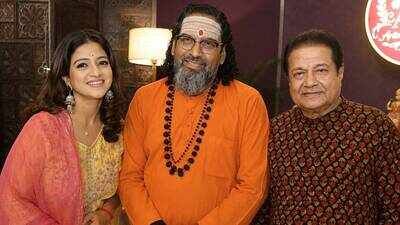
For over four decades, Anup Jalota has remained one of India’s most celebrated voices in devotional music, earning the title of the ‘Bhajan Samrat’ while touching millions through his soulful renditions. Now, on July 5, the legendary singer is preparing for one of the biggest spiritual gatherings of his career as he leads more than 2,70,000 collective chants of the Hanuman Chalisa at Chinmaya Mission South Africa’s historic Man to Hanuman celebrations in Durban, marking 75 years of the Chinmaya Movement under the guidance of Swami Abhedananda. Joining him on stage will be his student, singer and actor Anuja Sahai, making the occasion even more special for the veteran artiste.In an exclusive conversation with ETimes, Anup Jalota opens up about the spiritual significance of the event, why he never followed Salman-like stardom formulas, the pressures of instant fame, AR Rahman’s remarks on communal undercurrents in the film industry, and what keeps him grounded after decades in music. Anuja Sahai, meanwhile, shares what she has learnt from her guru beyond music and why performing alongside him before thousands of devotees is the greatest blessing of her life.
You have performed Hanuman Chalisa countless times across the world, but leading 2,70,000 collective chants in Durban is unprecedented. Beyond the numbers, what do you hope devotees and participants experience spiritually and emotionally through this gathering?
Anup Jalota: The numbers are certainly historic, but for me they are only a reflection of the devotion that has brought people together. This gathering, organised by Chinmaya Mission South Africa under the guidance and vision of Swami Abhedananda, as part of the global celebrations marking 75 years of the Chinmaya Movement, is about much more than creating a record. It is about celebrating a legacy of spiritual awakening, selfless service and unity that has inspired millions across the world. I deeply admire Swami Abhedanandaji’s vision of bringing the Hindu community together beyond language, region and background through the timeless power of the Hanuman Chalisa.I am especially happy that my student, singer and actor Anuja Sahai, will be joining me in leading the devotional singing during this historic gathering. Watching her evolve as an artiste has been immensely satisfying, and I am proud to see her carrying forward the values of devotion, discipline and sincerity through music. Sharing the stage with one’s student at such a significant spiritual celebration is always a deeply fulfilling experience for a guru.As over 10,000 devotees come together for one of the world’s largest collective Hanuman Chalisa gatherings, creating 2,70,000 chants in one voice, my hope is that every participant experiences inner peace, renewed faith and the strength that comes from collective prayer. When thousands pray with one pure intention, that collective spiritual energy has the power to uplift not just individuals but entire communities.
Many young people today are searching for meaning, connection and inner peace. Through an initiative like this, what message would you like to give to the younger generation about spirituality and community participation?
Anup Jalota: Spirituality is not about age; it is about awareness. Today’s youth are talented and ambitious, but they also live under tremendous pressure. Music, prayer and community have the power to provide balance and clarity. I would encourage young people to participate not because someone tells them to, but because they experience the joy of being part of something that uplifts everyone. Service, devotion and togetherness make us stronger human beings, and gatherings like this prove that Sanatana Dharma continues to unite generations across the world.
Your music has brought peace and comfort to millions of listeners. But every artist goes through phases of self-doubt, disappointment and loneliness. Tell us about one of your toughest moments that gave you strength.
Anup Jalota: Every artist experiences moments when things don’t go according to plan. There have been times when opportunities were uncertain and the future seemed unclear. During such phases, I always turned towards music and devotion. Singing became my meditation and my source of strength. Faith teaches you patience, and patience eventually rewards you. Those difficult moments made me appreciate every blessing that came later.
The audience often expects spiritual musicians to live almost saint-like lives. Have you ever felt burdened by expectations that were perhaps unfair because, at the end of the day, artists are human too?
Anup Jalota: People naturally associate devotional music with certain values, and I respect that. But artists are human beings with emotions, struggles and imperfections. The important thing is to remain sincere in your intentions and your work. I have never tried to project perfection; I have simply tried to remain honest in my music and my devotion.
You’ve had the opportunity to observe Anup Jalota ji not just as a performer but as a person and mentor. What have you learned from him about leadership, humility and using music as a force for bringing people together?
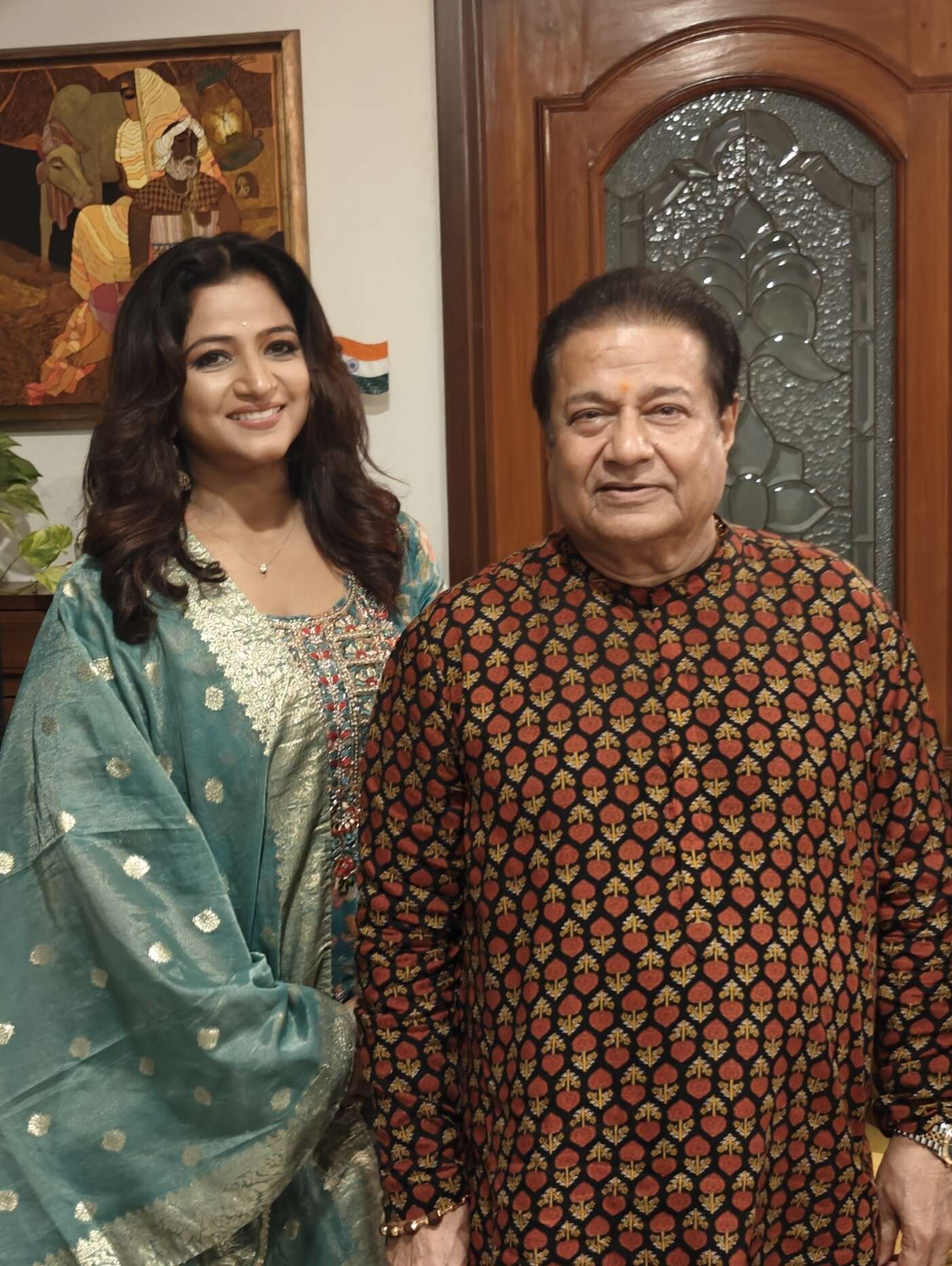
Anuja Sahai: As Anup ji’s student, and as a singer and actor, I consider it one of the greatest blessings of my life to learn from someone who has inspired generations through his music and devotion. I now have the privilege of performing alongside him at Chinmaya Mission South Africa’s historic Man to Hanuman celebrations in Durban, under the guidance of Swami Abhedananda, commemorating 75 years of the Chinmaya Movement.Being his student has taught me that true leadership is rooted in humility, kindness and service. Despite his legendary stature, he treats everyone with warmth and respect, and he leads quietly by example. He has shown me that music is far more than entertainment—it is a powerful medium to heal, inspire and unite people across languages, cultures and generations.To be singing before thousands of devotees alongside my guru at such a spiritually significant gathering is both an honour and a responsibility. It is a reminder that devotion expressed through music has the power to transcend boundaries and touch every heart.
As someone working closely with Anup Jalota, what is the one quality about him that has impressed you the most beyond the public image people see on stage?
Anuja Sahai: Without a doubt, it is his humility. Despite being one of India’s most respected and celebrated musical legends, he never carries that stature into a room. He listens, encourages, appreciates and makes everyone around him feel valued.As his student, I have experienced not just his musical brilliance but also his generosity as a mentor. He is always willing to guide, encourage and inspire without ever making you feel intimidated. That is a rare quality.The world knows him as the Bhajan Samrat, but those of us who know him personally know an incredibly compassionate, grounded and selfless human being. As we prepare to share the stage in Durban before thousands of devotees, I feel grateful not only to perform alongside him but also to continue learning from him. For me, that is the greatest blessing of all.
You have seen India change—from radio to cassettes, CDs, television, YouTube and now social media. Which era do you think valued music the most, and which era values visibility the most?
Anup Jalota: Every era has contributed to music in its own way. Earlier, music travelled slowly but stayed with people for decades because listeners invested time in truly appreciating it. Today, technology has made music accessible to everyone, which is wonderful, but visibility often comes faster than artistic maturity. I believe lasting success still belongs to those who continue learning and evolving, regardless of the platform.
When you meet young singers today, what concerns you more—their lack of patience, the pressure of instant fame, or the fear that they may not get enough time to grow as artists?
Anup Jalota: The biggest challenge today is the desire for instant success. Talent needs time, discipline and consistent riyaaz. Social media can make someone popular overnight, but popularity and longevity are two very different things. I always tell young singers that if they focus on becoming better artists instead of becoming famous, success will naturally follow. Music is a lifelong journey, not a race.
Recently, AR Rahman’s remarks about possible ‘communal’ undercurrents in the film industry sparked a major debate. Do you believe what he said and have you experienced such an environment in your career spanning decades?
Anup Jalota: I have always believed that music belongs to everyone and rises above religion, caste and every other identity. Throughout my career, I have worked with musicians, composers and artists from diverse backgrounds, and I have always been treated with warmth and respect. Every individual has their own experiences, and I respect what AR Rahman ji has shared. Personally, however, my journey has reinforced my belief that music has the unique ability to unite people where many other things divide them.
Has there ever been a performance that went completely wrong but later became a funny memory?
Anup Jalota: Live performances are always unpredictable. Sometimes there are technical glitches, forgotten cues or unexpected interruptions. At the time, they feel stressful, but later they become stories that make everyone smile. I have learned that audiences don’t remember perfection as much as they remember honesty. If you stay calm, smile and keep singing, even an unexpected moment can become one of the most memorable parts of a performance.
As a child, did you ever imagine that one day people would call you the ‘Bhajan Samrat’? Were your parents strict about studies, or did they encourage music from the beginning?
Anup Jalota: Never. I simply wanted to learn music sincerely and keep improving myself every day. I was fortunate to grow up in a family where music was deeply respected and encouraged. My parents valued education, but they also recognised my passion and gave me the freedom to pursue it. Whatever I have achieved is because of my parents’ blessings, my gurus, my audiences and, above all, God’s grace.
If someone who had never heard your music asked you, ‘Who is Anup Jalota beyond the headlines and beyond the title of Bhajan Samrat?’ , what would you want your answer to be?
Anup Jalota: I would simply say that I am a student of music who has been blessed with the opportunity to spread devotion, hope and positivity through my singing. Awards and titles are deeply humbling, but they are not my identity. My greatest joy comes from knowing that my music has brought peace to someone’s heart or strength during a difficult moment. Whether I am singing before a handful of people or leading thousands of devotees at Chinmaya Mission South Africa’s historic Man to Hanuman celebration in Durban, my purpose remains the same—to connect people with faith, with music and with themselves. If people remember me as a sincere musician, a humble human being and someone whose music touched their soul, I could ask for nothing more.