








Beavers do far more than build dams: These 20-kilogram rodents create wetlands, raise groundwater and lock away carbon |

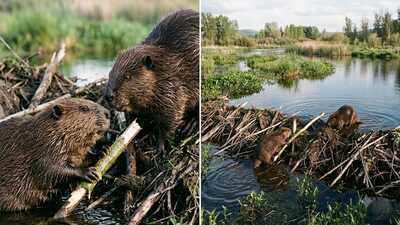
Beavers may weigh only around 20 kilograms, but their engineering skills can reshape entire landscapes. Using little more than their powerful teeth, branches, stones and mud, these rodents build dams that slow rivers, create wetlands and transform dry valleys into thriving ecosystems. While these structures are best known for forming ponds, scientists have discovered they…

Read More

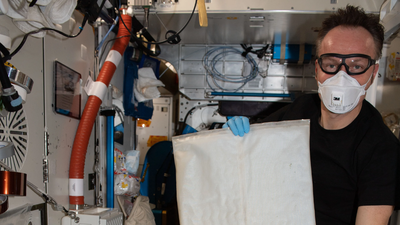
International Space Station’s $23 million toilet does far more than collect waste. It helps recycle about 98% of the station’s water into drinking water |

Life aboard the International Space Station (ISS) depends on making the most of every available resource, especially water. Transporting supplies from Earth is enormously expensive, so astronauts cannot simply rely on regular deliveries for drinking water. Instead, the ISS uses one of the most sophisticated recycling systems ever built. At the heart of that system…

Read More

Scientists found a 2,865-pound predator from before dinosaurs ruled Earth; now 2,000 ordinary people are helping reveal its skeleton

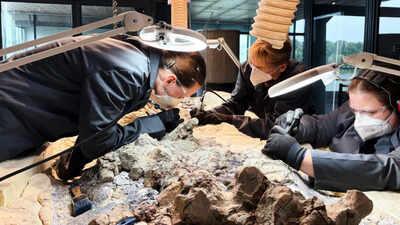
Under the watchful eye of scientists, volunteers clean the skeleton of a mastodonsaurus A huge fossilised skeleton weighing 1,300 kilograms (2,865 pounds) that was found in southern Poland is currently being chipped out of solid rock by a group of more than 2,000 public volunteers.According to a report by the Associated Press, this unusual public…

Read More

Scientists discover a new beetle genus named after One Piece’s Luffy, and its unusually long body parts explain why |

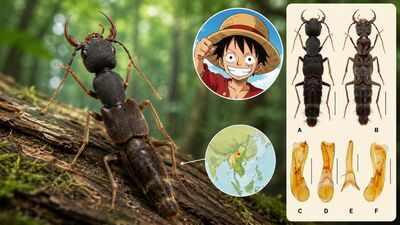
A scientific paper describing a previously unknown group of rove beetles has produced an unusual meeting point between taxonomy and popular culture. Researchers have introduced a new beetle genus named Luffy, borrowing the name of Monkey D. Luffy, the central character from the long-running manga and anime series One Piece. While the choice may appear…

Read More

A tapeworm infects worker ants and makes them live several times longer by turning their bodies more like those of queens

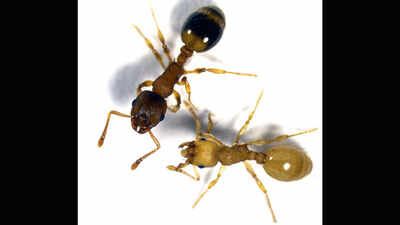
A worker ant of the species Temnothorax nylanderi infected with the tapeworm Anomotaenia brevis, recognizable by its yellowish coloration, alongside an uninfected worker (Credit: Susanne Foitzik) Deep inside the damp leaf litter of the Lenneberg Forest near Mainz, Germany, tiny worker ants of the species Temnothorax nylanderi are living surprisingly long lives. While a normal…

Read More

Invasive plants may be boosting mosquito numbers in lower-income areas, showing how neighbourhood vegetation can quietly shape public-health risks

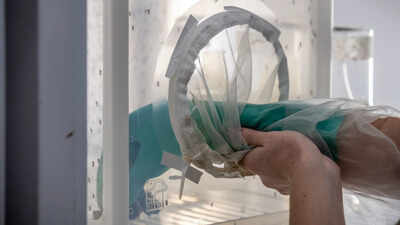
Hand reaching into a mosquito enclosure. Credit: Credit: Edwin Remsberg / University of Maryland Low-income urban neighbourhoods in Baltimore and Washington, DC, have higher mosquito numbers partly because of the types of trees growing on their streets and in empty lots, according to new research published in the Journal of Medical Entomology.The study, co-authored by…

Read More

128 new Saturn moons discovered: Scientists say they are fragments of ancient worlds |

Saturn has strengthened its position as the planet with the largest known family of moons after astronomers officially discovered 128 new moons. The discoveries were officially recognised by the International Astronomical Union (IAU) on 11 March 2025 following years of observations by an international team of researchers from Taiwan, Canada, the United States and France.The…

Read More

Hawaii: In 1955, Hawaii released a cannibal snail to control another invasive snail, but the predator instead helped push the islands’ rare native tree snails toward extinction

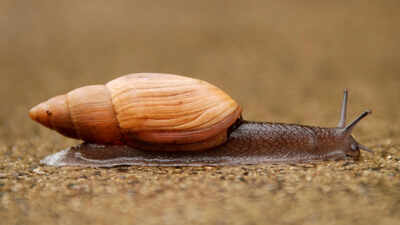
Still, the outlook for Hawaii’s snails is uncertain, symbolizing a new era in the conservation of endangered species. In 1955, wildlife officials in Hawaii released a meat-eating “cannibal” snail to control an invasive pest. But the plan went terribly wrong. Instead of eating the pest, the predator turned on the islands’ rare native tree snails,…

Read More

A silent coral reef came back to life after scientists played recordings of healthy reefs underwater |

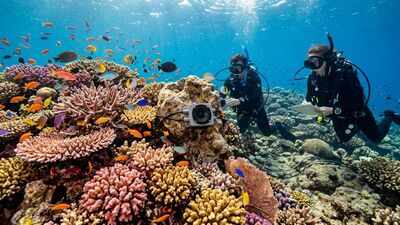
The decline of coral reefs is often described through bleaching events, rising sea temperatures and fading marine life. Less attention is paid to something that disappears at the same time: sound. A healthy reef is rarely quiet. Snapping shrimp, feeding fish and countless other marine animals create a constant underwater backdrop that helps young fish…

Read More